Representatives of the Congolese government and the Rwanda-backed M23 rebel group agreed on a roadmap for peace after negotiations in Geneva. The United States, Qatar, the African Union and Switzerland have all expressed support for the process, which builds on a US-brokered framework signed in Doha last year.
The roadmap sets out steps and timelines for negotiations and implementation, and a ceasefire monitoring mechanism is to receive support from the UN peacekeeping mission, MONUSCO. However, it is not a full peace plan with binding resolutions and terms. Many aspects of the push will still need to be fine-tuned.
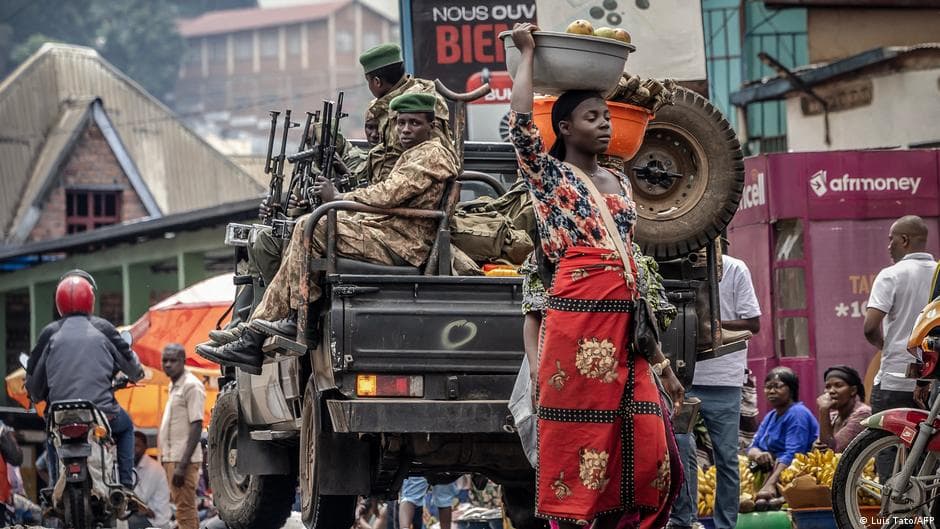
Fighting in eastern Congo has killed hundreds of civilians and displaced millions since 2022, with M23 controlling large parts of North Kivu and South Kivu — two mineral-rich provinces. Analysts said disagreements remain over key issues including sanctions against M23, the release of detainees and the timing of political reforms. Alex Vines, Africa program director at the European Council on Foreign Relations, told DW: "There are likely to be many more bumps on the road. So this remains a very fragile commitment."
Clifton Chifuwe, executive director of the Centre for Peace Research and Advocacy, a local NGO focused on conflict management, said the biggest challenge is turning the roadmap into action. "Signing it is easier than implementing it on the ground," he explained. He pointed to the presence of multiple armed groups, deep mistrust between Congo and Rwanda, and competition over mineral wealth as obstacles to peace.
Rwanda has repeatedly rejected accusations that it backs M23, though international groups maintain that the neighboring nation is deeply entrenched in the conflict. Rwandan President Paul Kagame said at a press conference on August 24 that any Rwandan involvement stems from security threats from across the border, particularly from the Democratic Forces for the Liberation of Rwanda armed group. Kagame said that "if this problem of the FDLR is not resolved," Rwanda would act to protect itself "at any cost."
Chifuwe highlighted that the roadmap includes a sequenced implementation plan with monitoring initiatives to identify warning signs before violence resumes. He said the real test will be "whether ordinary Congolese people become safer and better off," and stressed the need for restoration of state authority and management of mineral resources. One refugee, Linda Kasongo, who has been in Zambia for five years, said she wants to return home but cannot while violence continues. "I hope it works out because I want to go home," she told DW. "I want to be with my people."