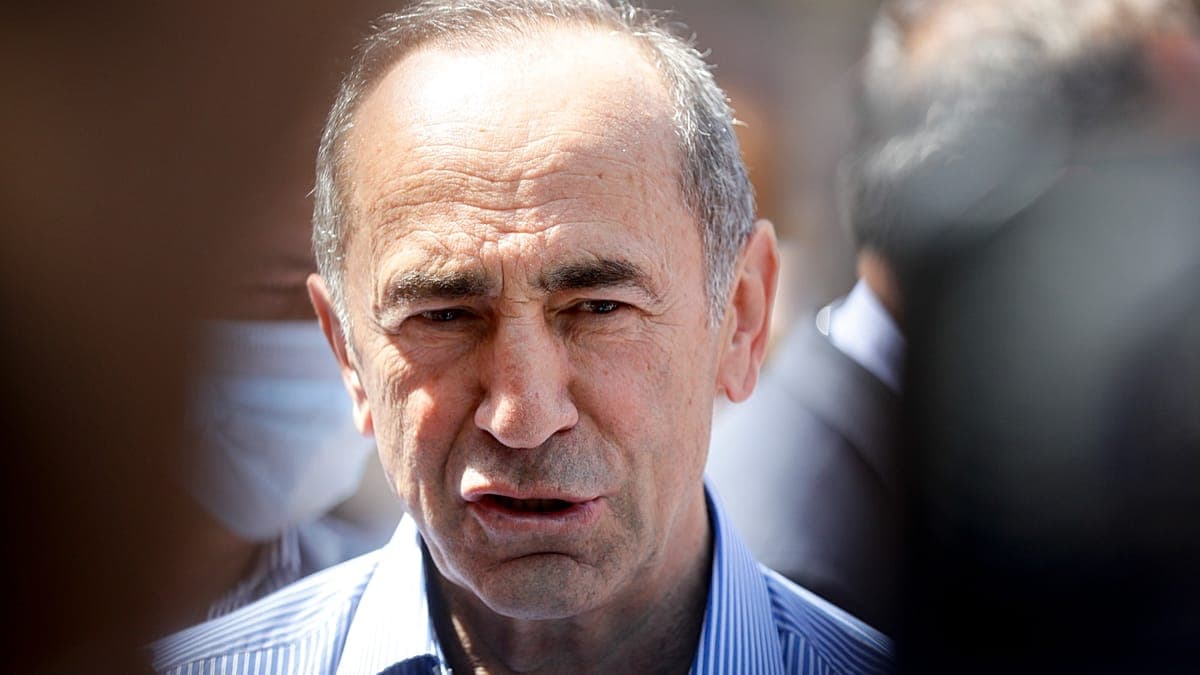
Former Armenian President Robert Kocharyan and his eldest son Sedrak were detained Tuesday after law enforcement officers conducted searches at dozens of locations linked to the family, Armenia's Anti-Corruption Committee said. The country's Prosecutor General's Office initiated criminal prosecution against Kocharyan, 71, on charges of abuse of authority, bribery, and large-scale money laundering.
Four other people were also detained as part of the investigation. Armenia's Anti-Corruption Committee said it was investigating allegations that state assets were illegally sold to private companies below market value during Kocharyan's time in office from 1998 to 2008. The case involves nine other people besides Kocharyan, the committee said.
Former President Serzh Sargsyan, who served as Kocharyan's prime minister from 2007 to 2008 before becoming president himself from 2008 to 2018, is also facing charges for alleged abuse of power as part of the case. Sargsyan was summoned to the Anti-Corruption Committee headquarters in Yerevan on Tuesday.
Bagrat Mikoyan, who heads Kocharyan's office, described the detentions as "yet another attack on President Kocharyan and his family" by authorities. He said Kocharyan felt ill after his detention and was taken to a hospital. The raids came less than 24 hours after Prime Minister Nikol Pashinyan clashed with Kocharyan's younger son Levon in parliament, where the younger Kocharyan accused Pashinyan of pressuring courts and law enforcement to open investigations. Pashinyan responded by asking where the Kocharyan family's wealth came from and said any assets gained at public expense should be returned to the state.
Kocharyan, who leads the Moscow-friendly Armenia Alliance opposition bloc, went on trial in 2019 accused of ordering the illegal use of force against demonstrators protesting alleged fraud in the 2008 presidential election. At least 10 people were killed in those clashes. The charges were later dropped and proceedings ended in 2021. Alexander Iskandaryan, director of the Caucasus Institute in Yerevan, said the case will intensify conflict between the pro-Russian opposition and Pashinyan's government, which is pursuing closer ties with the European Union.